
Parth Abhyankar
August 17, 2026 · 6 min read
What a Custom ERP Actually Costs in India (And What Makes the Price Move)
Most ERP vendors won't give you a number. Here's what a custom ERP actually costs, what moves the price, and when the cheaper option wins.
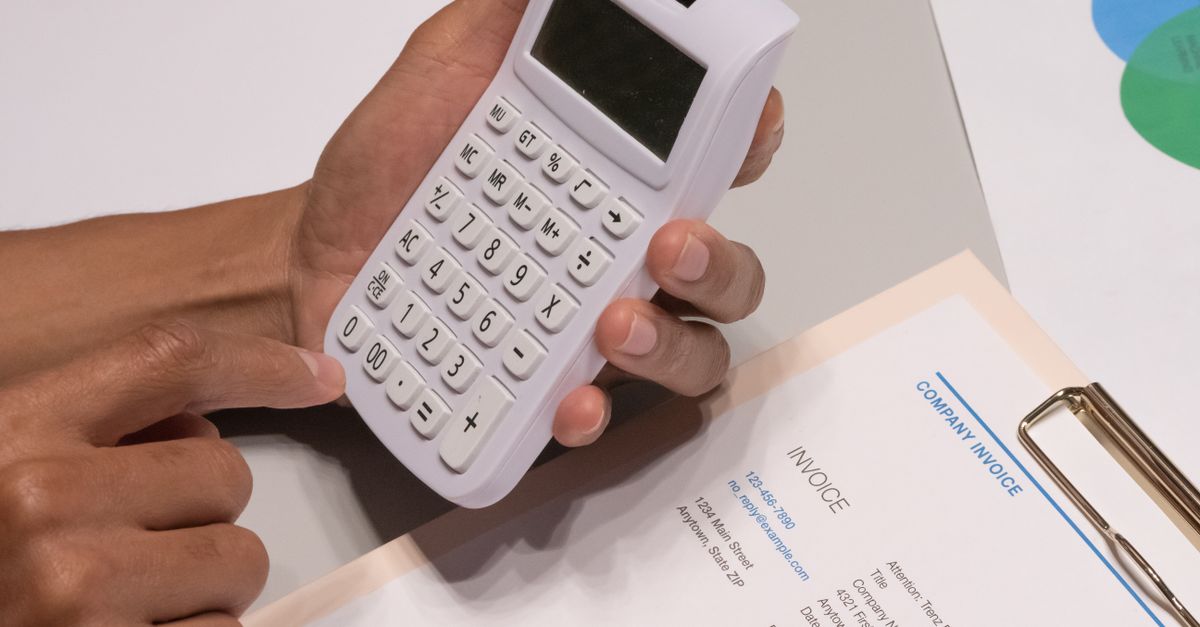
Go looking for what an ERP costs and you will find a lot of pages that don't tell you.
We went through the top-ranking results for custom ERP software recently. Every one of them explained that cost "should be viewed as a long-term investment", that pricing "depends on your requirements", and that you should book a call to discuss it. Not one published a figure. The pattern is so consistent it stops looking like caution and starts looking like a strategy: get you on a call before you have any way to sanity-check the quote.
So here are our numbers, and more usefully, the reasoning behind them.
The short answer
A custom ERP covering three to four workflows typically runs ₹4 to ₹8 lakh. Phase one — the first module in real daily use, not a demo — takes four to six weeks from a settled scope. After go-live, an annual maintenance contract runs 12 to 18% of project value per year.
That range is wide, and the width is the interesting part. The difference between ₹4 lakh and ₹8 lakh isn't negotiation or how badly someone wants the work. It's four specific things.
What actually moves the price
The number of distinct workflows. This is the big one, and it's not what most buyers expect. People assume cost scales with users or screens. It scales with processes. Production planning, procurement, job work, dispatch, and service are each a separate body of logic to design, build, and test. A system covering three of them costs a fraction of one covering eight — the same twenty users, a very different number.
Integrations. Tally, the GST e-invoice and e-way bill portals, payment gateways, biometric attendance, existing machines or IoT devices. Each is a contract with an external system that has its own quirks, its own downtime, and its own error cases you have to handle. A single awkward integration can cost more than a whole module. Ask any vendor to price integrations separately from features, because they behave differently.
Data migration. Consistently the most underestimated line in any ERP project. Bringing five years of masters and transactions out of an old system or a pile of spreadsheets is rarely a technical problem — it's a data quality problem. The same customer appears four times with three spellings. Half the item codes have trailing spaces. Opening balances don't tie out. None of that is visible until someone starts moving it, which is why migration is the single most common cause of a timeline slipping.
The number of user roles. Two roles is a permission check. Ten roles with genuinely different screens, approval chains, and visibility rules is a design problem that runs through the whole system.
"But packaged software is much cheaper"
It is, and any honest comparison has to start there.
TallyPrime Gold, which covers unlimited users on a local network, is listed at ₹67,500 plus GST as a one-time licence, with annual Tally Software Services renewal at ₹13,500 a year. The single-user Silver edition is ₹22,500 with TSS at ₹4,500. Those are 2026 prices from Tally's own material and its authorised partners, and they're worth checking before you rely on them — but the order of magnitude is stable and it isn't close to ₹4 lakh.
Here's the honest framing, though: Tally is cheap because it does a different job. It is excellent accounting software. It is not a production planning system, it does not track a job through six machines, and it will not tell you which work order is late and why. Comparing the two on price is comparing a very good hammer to a workshop.
The comparison that actually matters is against a packaged ERP plus the customisation you'll need to make it fit. That's where the arithmetic changes. Packaged systems are cheaper to start and get more expensive as you bend them, because vendor upgrades break customisations and you pay to repair them each time. Custom is expensive at the start and flat afterwards, with no per-user licence, so hiring ten more people doesn't raise your software cost.
Over five years, for a business with genuinely unusual processes, those two lines usually cross. For a business with standard processes, they never do.
When the cheaper option is the right one
We turn down ERP projects, and it's usually for one of these reasons.
Your processes are standard. If you're a trading business doing purchase, stock, sales, and GST invoicing in a normal way, buy the package. Building that from scratch means paying lakhs to recreate software that already exists and works better than a first version of yours will.
You need it next month. Custom development takes months. If the constraint is time rather than fit, a packaged system you partially outgrow beats a perfect system that arrives after the crisis.
Nobody internally can settle decisions. A custom ERP needs one person on your side who knows how the business actually runs and has the authority to decide when two departments disagree. Without that person, requirements churn and the project drifts. This is a bigger risk to your budget than any technical choice, and no amount of engineering fixes it.
Questions worth asking any vendor
Whoever you end up talking to, these four will tell you more than a feature list:
- What's in phase one, specifically, and when does it go live? A vendor who wants to build everything before you see anything is transferring all the risk to you. Phased delivery means if you part ways after phase two, you keep two working modules instead of an unfinished system.
- Who owns the source code and the data? The answer should be you, in writing. Ask what happens if you want to move to another developer in three years.
- What is the AMC, and what does it actually cover? Support and bug fixes, or enhancements too? Percentages vary; what's included varies more.
- What is the migration plan, and who cleans the data? If nobody has mentioned data cleaning, nobody has thought about migration.
The point of publishing this
A quote you can't evaluate isn't information. If you know a three-to-four-workflow system sits around ₹4 to ₹8 lakh, then a ₹15 lakh quote isn't automatically wrong — but you now know to ask what's in it that isn't in ours. And a ₹1.5 lakh quote should worry you more than it excites you.
If you're weighing this up, our custom ERP development page covers what we build and how we work. If you're earlier in the process and still deciding whether you've outgrown what you have, this piece on outgrowing spreadsheets is the better starting point.
Either way — ask for the number. Anyone unwilling to give you a range before a call is telling you something.
Image: Photo by Kindel Media on Pexels.
Monthly newsletter
Found this useful?
Get our monthly insights — no fluff.
You're subscribed. Talk soon!
Was this article useful?
Keep reading
You might also like
Aug 20, 2026 · 8 min read
HVAC Field Service Management Software Costs in India
Aug 18, 2026 · 7 min read
AMC Management Software: What It Costs in India
Jun 30, 2026 · 5 min read