Ketaki Abhyankar
June 1, 2026
From Film Sets to Software: What Surprised Me Most
After years managing Marathi film productions, I expected software to be a completely different world. Instead, I discovered that both industries share the same challenges: aligning people, managing change, controlling budgets, and earning trust. As Resonics marks 13 years, one lesson stands out—successful projects aren't just about technology or creativity; they're about delivering on promises and turning vision into reality.
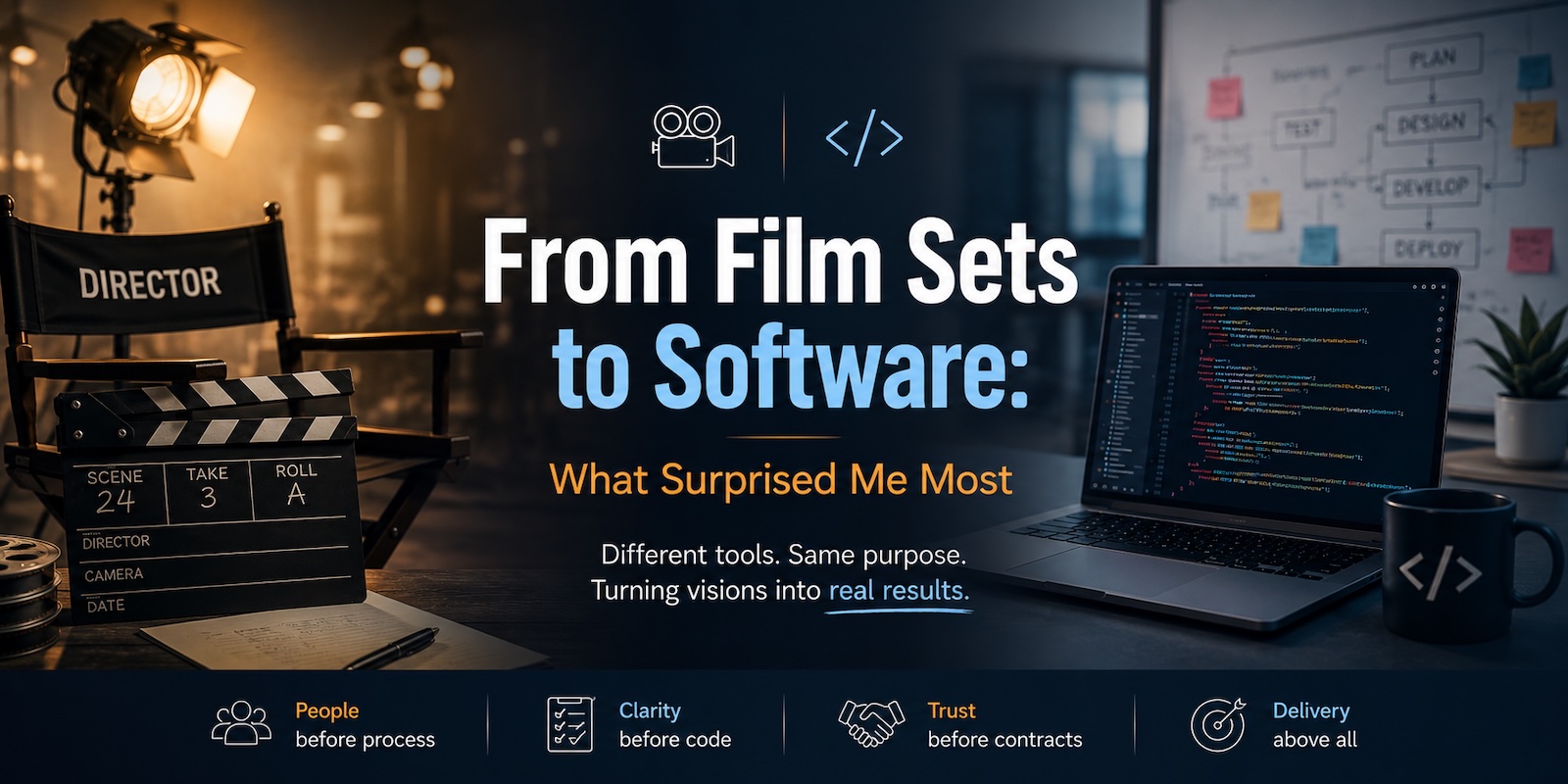
I spent some years managing Marathi film productions. Not directing but managing everything behind the camera. Budgets, schedules, location permissions, a crew of sometimes 200+ people, vendors, last-minute problems that needed solving before the director even knew they existed. When a film hits theatres, there's no version two. It works or it doesn't. Day one, the audience decides. That was my world. And when I came back to Resonics Technologies as a director, I was sure software would feel completely different. I was wrong about almost everything. And right about one thing.
But first last week, on 29th May, Resonics completed 13 years. No big event, no announcement. Just the next project, the next brief, the next problem to solve. Which is honestly the most fitting way to mark 13 years in this business. You show up. You deliver. You keep going.
What I expected...
Films are emotional. Egos, gut calls, arguments about creative choices nobody can prove right or wrong. I thought software would be the opposite; data, clear solutions, predictable work. I wasn't entirely wrong about the processes. But the people? Exactly the same.
What I found...
A software project and a film have the same skeleton. A client who doesn't know what they want at the start will cost twice as much by the end; same as a director who rewrites the script after the shoot begins. Budgets don't overrun because of one big decision. They overrun because of a hundred small ones nobody tracked. And the hardest part of any project is never the technical work. It's making sure everyone has the same picture of what "done" looks like before the work starts. I expected to leave the chaos behind. The late nights, the last-minute changes, the 11pm calls. Different chaos. Different last-minute changes. Same 11pm calls.
The one thing I was right about Trust doesn't come with a contract. On a film set, a signed agreement means nothing if the crew doesn't believe in you. Trust gets built in small moments like how you handle a bad day, how you deliver difficult news, whether you stay when things get hard. I expected software to be more transactional. Sign, deliver, invoice, done. The paperwork is all there. But the projects that go well where clients come back, refer others, stick around, go well for the same reason a good shoot does. The client feels you're genuinely on their side. And you've given them reasons to believe that before the hard conversations begin.
The skills from film sets; managing pressure, holding things together, delivering on a promise turned out to be exactly what software needed. Not because the industries are similar. But because both are about taking someone's vision and making it real. On time, within budget, to a standard that makes the client proud. The costume is different. The skeleton is the same.
At Resonics we build websites, custom software and ERP systems. If you want to work with people who understand delivery not just development, we'd love to talk.
Monthly newsletter
Found this useful?
Get our monthly insights — no fluff.
You're subscribed. Talk soon!
Was this article useful?
Keep reading